
Zidore is an internal intranet developed by the Apprentis d’Auteuil Foundation to centralize the monitoring of young people supported by its educational teams. Far from being just a simple documentation tool, this platform structures the individualized path of each beneficiary by connecting educators, service heads, and families around a common workspace.
The Personalized Project for the Young Person, the foundation of support at Apprentis d’Auteuil
Before understanding what Zidore concretely brings, it is essential to grasp the mechanics that organize the support. At Apprentis d’Auteuil, each young person is the subject of a Personalized Project for the Young Person (PPJ). This formal document is jointly developed by the referring educator, the service head, and, when possible, the young person’s family.
The PPJ is not limited to a school or professional objective. It covers several life dimensions: housing, health, mobility, internship search, and professional project. A specialized educator recruited by the Foundation is explicitly tasked with supporting the young person across all these areas, not just the educational aspect.
This transversal approach creates a need for ongoing coordination. Several professionals intervene in the same path, each with partial information. Without a shared tool, the risk of compartmentalization is real: a coordinator may be unaware that an educator has identified a barrier related to mobility, or that a service head has adjusted the PPJ objectives after a family meeting.
The connection to Zidore Apprentis d’Auteuil fits precisely into this logic: to provide a unique entry point where each actor can find the status of the path in real-time.
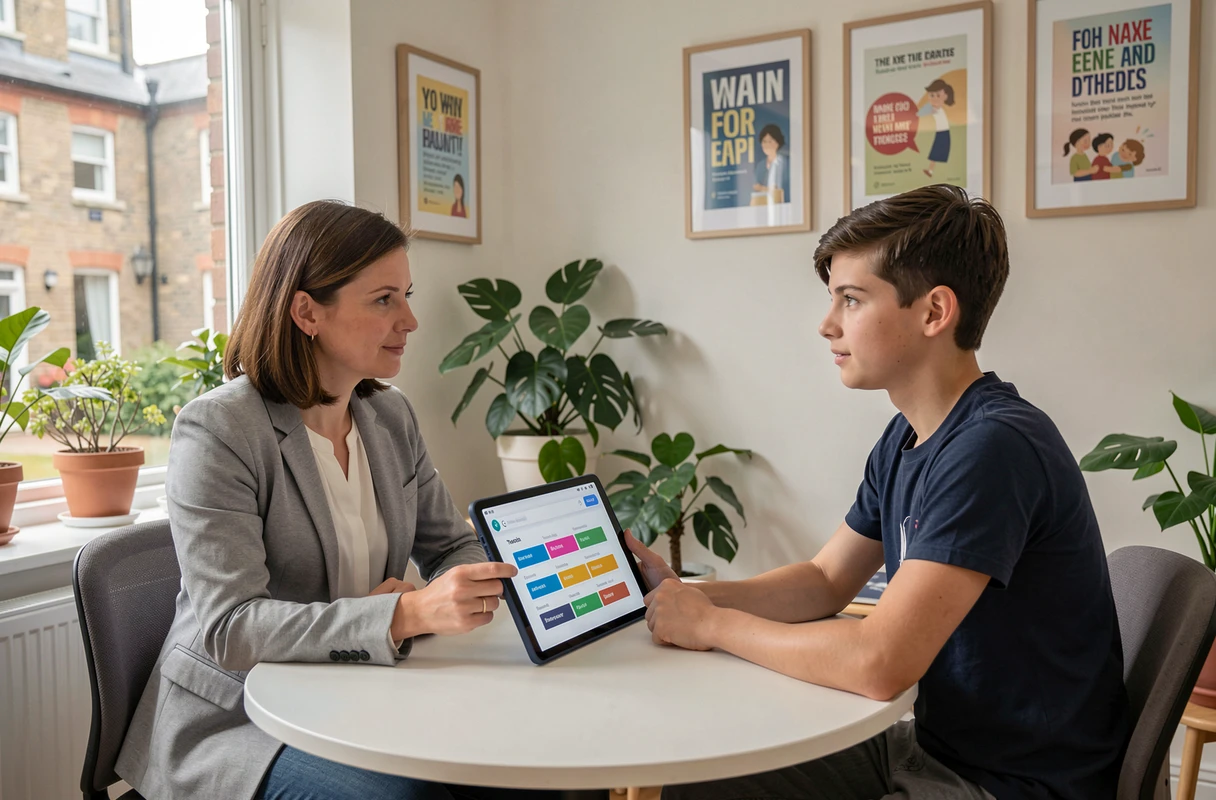
Zidore as an internal workspace: what the platform allows
Zidore is neither a public site nor an institutional showcase. Project archives describe it as a dedicated intranet for managing paths. Access is granted through individual authentication on a secure portal, ensuring the confidentiality of data related to minors and young adults being supported.
The distinction is significant. A documentary intranet stores files. An internal workspace, such as Zidore, organizes information around the path of each young person. Professionals can thus consult and contribute to the PPJ without waiting for a synthesis meeting or an email exchange.
The dimensions covered by transversal monitoring
Support at Apprentis d’Auteuil is not limited to an educator-young person relationship. The Foundation’s recruitment offers detail the areas in which an educator intervenes daily:
- The professional project and internship search, with monitoring of the steps taken and feedback received
- Access to housing and health, two dimensions often crucial for the stability of the path
- Mobility, which conditions access to training and internship locations in less-served areas
Zidore provides a framework to document these different dimensions without treating them in silos. When an educator notes a blockage related to transportation, the coordinator can adapt the action plan without delay.
Multi-actor coordination and traceability of the educational path
Personalized support at Apprentis d’Auteuil relies on a structured teamwork among several profiles: specialized educators, coordinators, service heads, and sometimes external pedagogical interveners. This plurality of actors makes the traceability of the path essential.
A tool like Zidore fulfills this function by centralizing the contributions of each professional on the same file. The educator records their observations after an individual interview. The service head validates or adjusts the objectives of the PPJ. The coordinator checks that the planned actions are indeed being implemented.
What centralization changes in daily practice
Without a shared platform, coordination relies on regular meetings and oral or email communications. These methods work, but they introduce delays. An educator absent from a synthesis meeting may miss information that alters their approach.
With an intranet structured around the path, each professional accesses the complete history of the young person when they need it. Traceability serves not only institutional reporting: it also protects the young person, preventing information from being lost during a change of reference or team mutation.
Digital monitoring and social protection of supported young people
Centralizing data related to vulnerable minors and young adults imposes strict confidentiality requirements. The fact that Zidore operates as an authenticated portal (and not as a freely accessible tool) meets this constraint. Only authorized professionals access the information on the path.
This architecture also protects the trust relationship between the young person and their educator. Sensitive information, whether concerning health, family situation, or difficulties encountered, remains within a controlled perimeter. The young person knows that what they confide to their referent does not circulate without framework.
- Access is limited to professionals directly involved in the young person’s path
- Individual authentication allows tracking who has consulted or modified a file
- The PPJ remains a document shared between the educational team and the family, not a file open to the entire structure
For a foundation that supports thousands of young people across the country, having an internal tool dedicated to individual monitoring is not a technological luxury. It is a condition for the personalized project to remain a living framework, fed by each professional throughout the path.
The choice of a custom intranet, rather than a generic case management software, reflects a clear priority: to adapt the tool to the educational practices on the ground, and not the other way around.