Falls do not affect all age groups in the same way. After the age of 65, the risk increases significantly, with hospitalizations and mortality rising as one gets older. Understanding which ages are most exposed to falls allows for targeted prevention where it really matters.
Frequency of falls and severity: two realities not to be confused
Falling is common. Falling and ending up in the hospital is much less so. This distinction is crucial for properly interpreting fall statistics.
The hospitalization data published by Santé publique France accounts for hospital stays related to a fall. It therefore measures serious consequences, not the total number of falls that occurred in the population.
In contrast, the Barometer of Santé publique France (2024 edition) is based on declarations from the general population. It makes visible falls that do not result in hospitalization, such as those followed by a simple consultation with a doctor.
Mixing these two sources without caution gives a distorted picture. An age group may report many falls without this translating into a high number of hospitalizations, and vice versa. To analyze fall statistics by age, it is therefore essential to specify what is being measured: reported frequency or severity observed in the hospital.

Falls after 65: a gradient of risk related to age
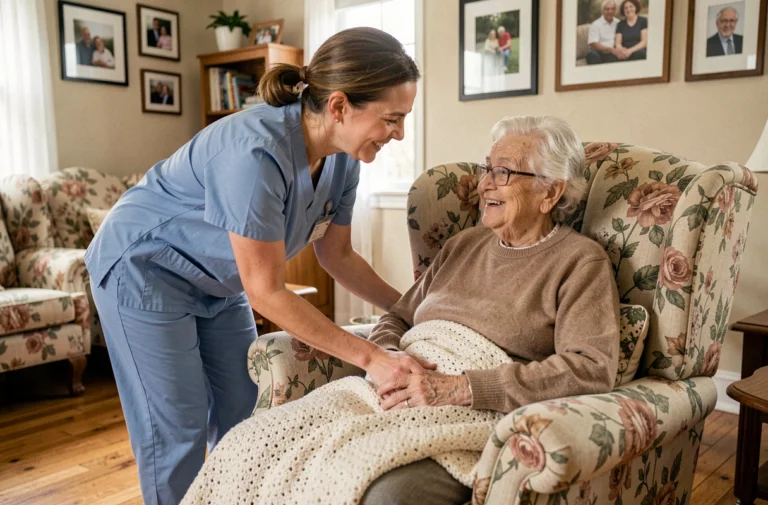
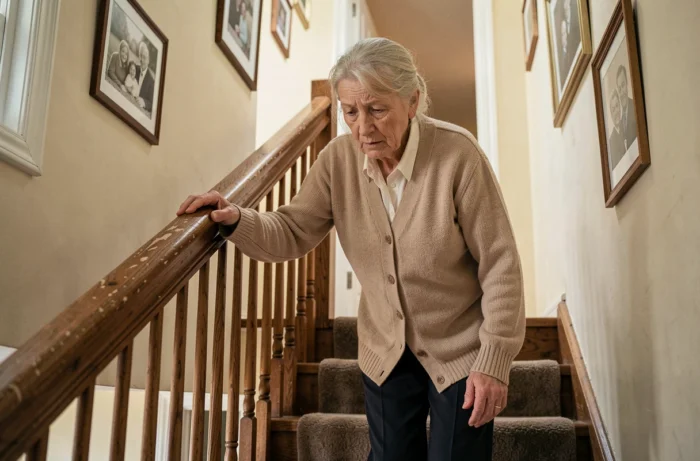
Have you ever noticed that an elderly parent hesitates more in front of a sidewalk or stairs? It’s not a coincidence. With age, balance, muscle strength, and reaction time gradually decrease.
In 2024, Santé publique France recorded 174,824 hospitalizations related to falls among those aged 65 and older. This figure represents a 20.5% increase compared to 2019.
In the same year, 20,148 deaths related to falls were reported in this age group, marking an 18% increase in the mortality rate compared to 2019. The observation is clear: the older one gets, the heavier the consequences of a fall become.
The role of sex in the statistics
Women fall more often than men. Several factors explain this gap: a higher prevalence of osteoporosis, generally lower muscle mass, and a longer life expectancy that exposes them more to advanced age.
Fine age groups: why averages mask different realities
Grouping all people aged 65 and older into a single category gives the impression of a homogeneous block. The reality is more nuanced.
Nearly one in five people aged 65 to 79 reported having fallen in the past twelve months. This ratio significantly increases beyond the age of 80, where falling becomes a marker of frailty and a predictive factor for dependence.
The HAS emphasizes this in its 2024 recommendations: a fall in an elderly person is not just an accident. It can trigger a loss of self-confidence, a fear of falling that leads to reduced mobility, physical activities, and social relationships. This vicious circle accelerates the loss of autonomy.
- Between 65 and 74 years, falls are common but their consequences often remain moderate (bruises, sprains).
- Between 75 and 84 years, the risk of fracture increases significantly, particularly hip fractures.
- Beyond 85 years, hospitalizations and mortality reach their highest levels. Recovery is longer and admission to institutions is more frequent.
Adapted physical activity: prevention that changes the statistics
Why do some 80-year-old seniors remain stable on their feet while others fall several times a year? The answer largely lies in physical activity.
The HAS published in 2024 a prescription sheet for adapted physical activity (APA) aimed at at-risk elderly individuals.
The principle is simple: strengthening balance and muscle strength reduces the likelihood of falling. APA programs generally combine three types of exercises:
- Balance work (walking on a line, one-legged support, tai chi) to improve postural stability.
- Muscle strengthening of the lower limbs (assisted squats, step-ups) to compensate for age-related muscle mass loss.
- Joint flexibility exercises to maintain the range of motion necessary for daily activities.
A less visible point in national statistics: prevention through physical activity should start well before the age of 75. Waiting for the first signs of frailty means intervening at a stage where recovery requires more time and support.
Falls at home: the place where most accidents occur
Most falls among the elderly occur at home. Stairs, bathrooms, poorly secured rugs, insufficient lighting: environmental risk factors accumulate in a home that has not been adapted to aging.
Home modifications represent a complementary prevention lever to physical activity. An occupational therapist can identify risky areas and propose targeted modifications: grab bars, removal of floor obstacles, non-slip surfaces.
Falls are not an inevitability related to age. Data shows that the risk increases significantly after the age of 75 and peaks beyond 85, but a significant portion of these accidents could be avoided. Acting on physical activity from the age of 60-65 and adapting the home before the first serious fall remains the most effective combination to preserve autonomy.