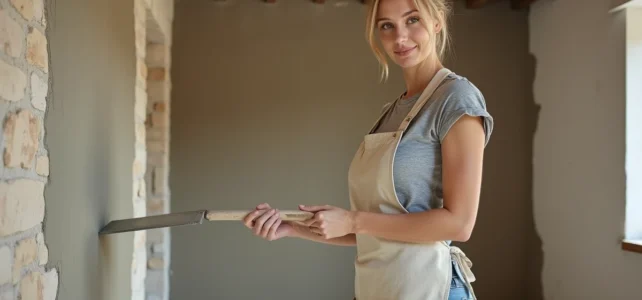
When tackling the renovation of a house built in the 1970s or 1980s, the first instinct is often to replace the boiler. On-site, this is a sequencing error that can be costly: a new boiler sized for poorly insulated construction will be oversized once the insulation is installed. Ecological and economical renovation begins with a diagnosis, followed by a precise order that determines the final result.
Sequence of energy renovation work: the order that changes everything
Several recent guides on energy renovation emphasize a strict hierarchy of tasks: energy performance audit or diagnosis, then insulation, then ventilation, then heating, then energy production. Skipping a step or reversing the order creates concrete problems.
For example, insulating without reviewing ventilation makes the building airtight without sufficient air renewal. The result: condensation on walls, mold, material degradation. There have been sites where the absence of mechanical ventilation after insulation caused damage in less than two winters.
Conversely, installing a heat pump before insulating the attic is like heating a sieve. The machine runs at full capacity, consumes more energy than expected, and its actual efficiency remains poor. Additional resources on suitable materials and methods for each step can be found at maisonfutureco.fr, particularly for cross-referencing insulation and heating solutions.
The diagnosis as a starting point
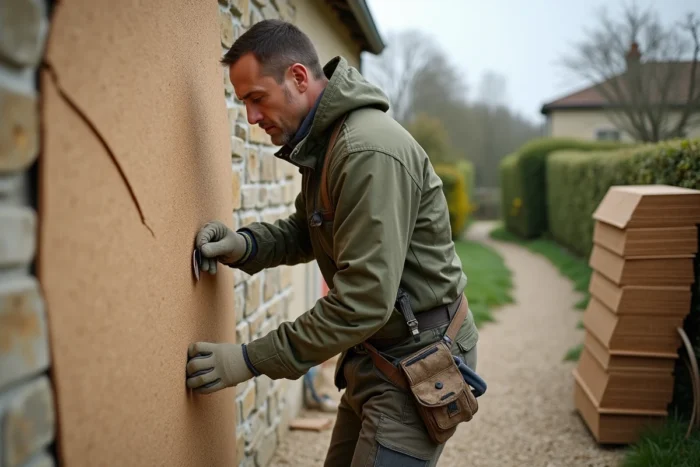
The energy performance diagnosis (DPE) identifies areas of heat loss: roof, walls, windows, ground floor, heating system. Without this mapping, renovations are done blindly.
An energy audit goes further: it prioritizes work based on return on investment and proposes quantified scenarios. For a house rated F or G, the audit is now mandatory before sale. It is also the document required by financial aid organizations to validate a file.
Ecological insulation: bio-sourced materials and priority areas
The attic remains the most cost-effective area to address. Heat rises, and a poorly insulated roof allows a significant portion of heating energy to escape. Next come the walls (either from the inside or outside depending on the configuration), followed by the ground floor.
In terms of materials, bio-sourced insulators are gaining ground for good technical reasons:
- Wood fiber offers excellent thermal lag, which also protects against summer heat, an increasingly decisive criterion with heatwave episodes
- Cellulose wadding, made from recycled paper, is blown into lost attics and offers a good performance/price ratio
- Expanded cork naturally resists moisture, making it suitable for buried walls or exposed areas
Choosing a bio-sourced insulator reduces the grey energy of the project while improving summer comfort. Feedback on this point varies depending on the thickness installed and the building’s exposure, but the thermal lag of wood fiber makes a measurable difference compared to conventional mineral wool.
Summer comfort and climate resilience: the forgotten angle of renovation
The majority of content on ecological renovation focuses on heating savings in winter. On-site, occupants are increasingly suffering from summer overheating, especially in houses with converted attics or large south-west facing windows.
Adapting the building to the future climate is part of ecological renovation. This involves concrete choices: external solar protections (shutters, sunshades), cross-ventilation at night, greening the surroundings to limit the heat island effect at the plot level.
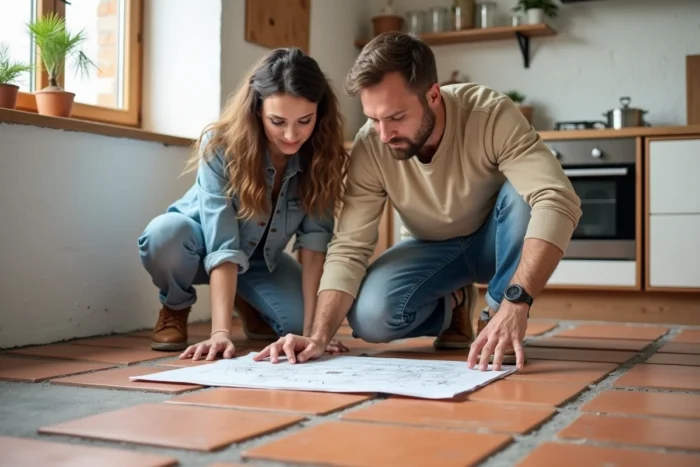
External insulation (ITE) with a material that has high thermal lag addresses both seasons in a single project. It is a heavier investment than internal insulation, but the comfort gain in both summer and winter often justifies the difference.
Ventilation and indoor air quality
After insulation, air renewal becomes a technical task in its own right. A double-flow mechanical ventilation system recovers heat from the extracted air to preheat the incoming air. In winter, this limits losses. In summer, some models include a bypass that short-circuits the exchanger to cool the house at night.
Ventilation and insulation form an inseparable duo. Addressing one without the other degrades the overall result.
Low-carbon heating and financial aid for renovation
Once the building is insulated and ventilated, the heating needs drop. One can then size a system suited to actual consumption, not to that of the original thermal sieve.
The most common solutions in ecological renovation include:
- The air-water heat pump replaces the existing gas or oil boiler and supplies the radiator circuit or underfloor heating
- The wood pellet stove complements a central system in medium-sized houses, using renewable fuel and offering high efficiency
- The solar water heater covers a significant portion of domestic hot water needs, especially in the southern half of the country
- The pellet boiler serves as an alternative to gas for large areas, with a buffer tank that stores heat
In terms of aid, MaPrimeRénov’ remains the central mechanism for financing this work. The amount depends on the household income, the type of work, and the targeted energy gain. Energy savings certificates (CEE) complement the funding. Combining MaPrimeRénov’ and CEE significantly reduces the remaining costs, especially for comprehensive renovations.
Accompanied self-rehabilitation: an economic option
Rather than delegating everything or doing everything oneself without safety nets, accompanied self-rehabilitation offers an intermediate framework. A training craftsman supervises the site, we carry out simple tasks (installing insulation in attics, earth plasters), and the professional intervenes on technical points (air tightness, ventilation connections).
This approach requires outlining responsibilities and insurance in writing before starting. The savings on labor can reach a substantial part of the total budget, provided one commits to a realistic schedule.
Ecological renovation does not need to be a monolithic project completed in a single phase. Respecting the order of tasks, from diagnosis to energy production, and choosing materials suitable for both the current and future climate remains the foundation of a project that delivers on its promises over time.