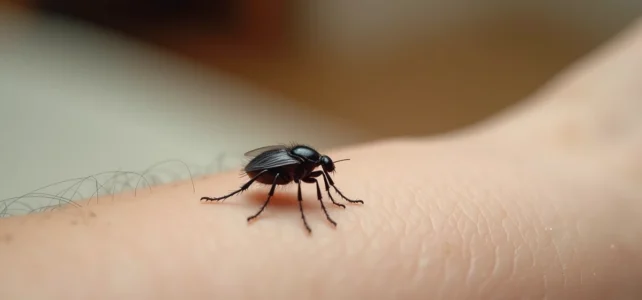
A small black creature jumping on the bathroom tiles or on the surface of the potting soil of a houseplant almost always triggers the same reflex: flea or bug? In the vast majority of cases, we are dealing with a springtail, a non-biting arthropod related to moisture, and not an ectoparasite. The distinction is based on specific morphological and behavioral criteria, not on color or size perceived by the naked eye.
Furca and morphology: the sorting criterion that photos do not show
The springtail has a folded appendage under its abdomen called furca, which acts like a mechanical spring. This device propels the animal several centimeters high, which maintains the confusion with the flea. The flea, on the other hand, jumps using muscular, laterally compressed hind legs.
Under a binocular microscope (x20 is sufficient), the difference is clear: the springtail has a globular or elongated body depending on the species, well-visible segmented antennae, and does not exceed five millimeters. The flea has a laterally flattened body, piercing-sucking mouthparts, and leaves darkish droppings (digested blood) on light textiles.
We recommend a simple test before taking any action: place a damp white cloth on the ground overnight. Rust-brown stains in the morning indicate a flea. The complete absence of stains, combined with erratic jumps near damp areas, confirms the springtail. This step allows you to identify a small black creature that jumps without immediately resorting to a professional.
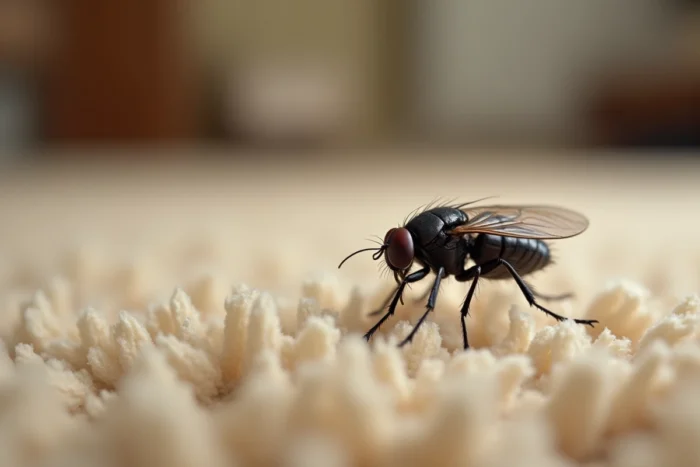
Flea beetles and weevils: other small black jumping creatures indoors
The springtail is not the only black jumping arthropod found in a home. Flea beetles, phytophagous beetles a few millimeters long, regularly enter through potted plants brought in from the garden or balcony. Their jump is produced by swollen hind femurs, a mechanism distinct from the furca.
The rice or wheat weevil, matte black and equipped with an elongated snout, does not jump but moves quickly and can be confused from a distance. It infests stored goods (flour, pasta, rice) and not damp areas. The location of the insect is therefore a primary indicator:
- Bathroom, basement, damp potting soil: springtail with a very high probability
- Plant leaves perforated with small round holes, windowsill: flea beetle introduced by the plants
- Food cupboards, cereal bags: weevil or dermestid, without jumping ability
- Bedding, bedroom baseboards, aligned bites on the skin: flea (Ctenocephalides felis most often, even without a visible pet)
Field reports from pest control companies confirm that an increasing share of urgent reports for “fleas” turn out to be flea beetles or springtails introduced by potted plants.
Insect identification applications: reliability and limits for home diagnosis
Applications like Seek, iNaturalist, or Picture Insect are increasingly used for a first sorting between flea, springtail, and flea beetle. Several French-speaking entomological forums consider their identification rate sufficient for a preliminary sorting, provided a clear photo is provided with side lighting and a scale (a coin next to the specimen).
A blurry photo or one taken from too far renders the algorithm useless. The ideal shot shows the insect’s lateral profile against a light background. For specimens less than two millimeters, a macro lens that clips onto a smartphone significantly improves recognition.
These tools do not replace an entomologist, but they allow for quickly ruling out the most anxiety-inducing hypotheses (bed bug, flea) and avoiding unnecessary chemical treatment.
Document before treating: the procedure that avoids disputes
For several years, pest control companies and home insurance have recommended documenting the infestation with dated photos or videos before any chemical treatment. Misidentifications between fleas and springtails have become a frequent reason for contesting quotes or refusing coverage.
A solid file includes at least:
- Several timestamped macro photos showing the insects in situ (specific location, proximity to a moisture source or food)
- A short video of the jumping behavior, which allows a professional to distinguish between furca and jumping by hind legs
- A hygrometry reading of the affected room (a basic hygrometer is sufficient), as a level above the comfort threshold directly indicates the springtail
In case of a rental dispute, a bailiff’s report supported by these elements constitutes an admissible piece of evidence. This precaution avoids paying for an insecticide treatment against an organism that disappears as soon as the humidity decreases.
Springtails indoors: treatment unnecessary if humidity is not corrected
Entomologists and naturalist associations advise against insecticide treatments indoors when the springtail is clearly identified. This arthropod plays a positive ecological role in soils: aeration of the substrate, recycling of organic matter, regulation of fungal populations.
Indoors, its presence signals a structural humidity problem (leak, condensation, insufficient ventilation) or excessive watering of plants. Correcting the source of humidity is enough to make the population disappear within a few days. A simple mechanical wiping of surfaces complements the action.
Spraying an insecticide on springtails without addressing the humidity guarantees their return at the next condensation episode. We observe this recurring pattern in poorly ventilated homes, where occupants go through treatments without lasting results.
The only situation justifying calling in a pest control professional remains the confirmation of a flea infestation (observed bites, droppings on textiles, presence of pets or recent passage of a carrier animal). For any other scenario involving a small black jumping creature, the humidity diagnosis takes precedence over chemical treatment.