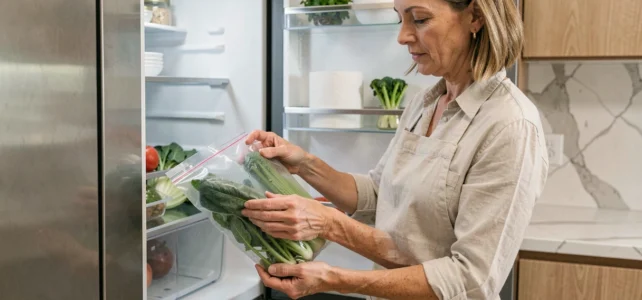
We open a vacuum-sealed meat pouch that was prepared five days earlier, and it smells as fresh as the day it was purchased. No discoloration, no sticky texture. Removing oxygen effectively slows down oxidation and bacterial growth, but the actual shelf life depends on the quality of the seal, the choice of bag, and the management of cold storage after sealing.
Better understanding the preservation of vacuum-sealed foods allows us to truly harness the potential of this technique, whether for weekly meal prep or for storing bulk purchases.
Anaerobic risk and cold chain: the trap of poorly mastered vacuum sealing
Removing oxygen blocks most aerobic bacteria, the ones that cause browning and unpleasant odors. This single action eliminates about 80% of problematic microorganisms. The natural reflex is to assume that the product is safe once the bag is sealed.
This is where an underestimated problem arises. The absence of oxygen can promote anaerobic bacteria like Clostridium botulinum, which thrive in airless environments. A vacuum-sealed pouch stored at room temperature or in a poorly set refrigerator creates a favorable environment for these pathogens.
The operational rule is strict: vacuum-sealed food must remain consistently below 4 °C in the refrigerator or be placed in the freezer. Any prolonged break in the cold chain negates the benefits of vacuum packaging. This is not just theoretical advice, but a real health constraint that food service professionals apply daily.
To better understand the expected durations for each type of product, the preservation of vacuum-sealed foods varies significantly between red meat, fresh fish, and blanched vegetables.
Bag quality and seal integrity: neglected preservation factors
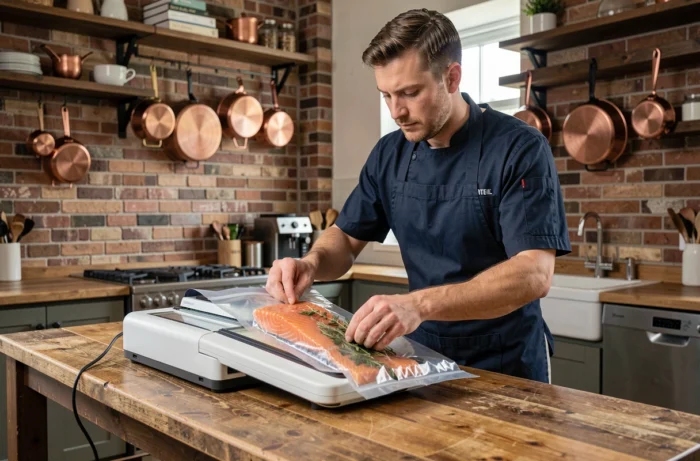
We invest in a high-performance machine but buy low-cost bags. The result: invisible micro-perforations that allow air to enter within a few days. The quality of the packaging directly affects the shelf life, not just the suction power.
Vacuum-sealable food bags are either embossed or smooth depending on the type of machine used (external suction or chamber). Each format has its constraints.
- Embossed bags are suitable for domestic external suction machines: their raised channels allow air to circulate towards the pump, but they do not withstand long cooking at high temperatures as well.
- Smooth bags are designed for professional chamber machines and offer a more durable seal, suitable for prolonged sous vide cooking.
- Double sealing, which involves creating two parallel seal lines, enhances airtightness for liquid products or cooking for several hours.
Before storing a pouch in the refrigerator or freezer, we systematically check the integrity of the seal. A simple press on the bag is enough: if air escapes or the seal comes apart, we start over. A poorly sealed bag does not preserve food better than regular plastic wrap.
Rapid cooling after sous vide cooking: the step that many skip
We prepare a batch of sous vide chicken breasts for the week. The cooking is done, and the pouches are intact. The temptation is to place them directly in the refrigerator. This is a technical mistake.
Rapid cooling in an ice bath is a critical step for sous vide cooked foods that are not consumed immediately. The temperature zone between 60 °C and 4 °C is where bacteria multiply the fastest. The longer food stays in this range, the greater the health risk.
The method is simple: we plunge the sealed pouches into an ice water bath immediately after cooking. We maintain the cold bath by adding ice if necessary, until the internal temperature of the product drops sufficiently. We then transfer it to the refrigerator or freezer.
Feedback varies on the exact duration of the bath depending on the thickness of the pieces, but the principle remains the same: never let a cooked pouch cool slowly at room temperature. This cooling logic, common in professional kitchens, applies equally in home cooking.
Sous vide and meal prep: organizing portions for the week
Sous vide transforms batch meal preparation. We cook or prepare in one session, portion individually, and each pouch becomes a meal ready to heat or defrost.
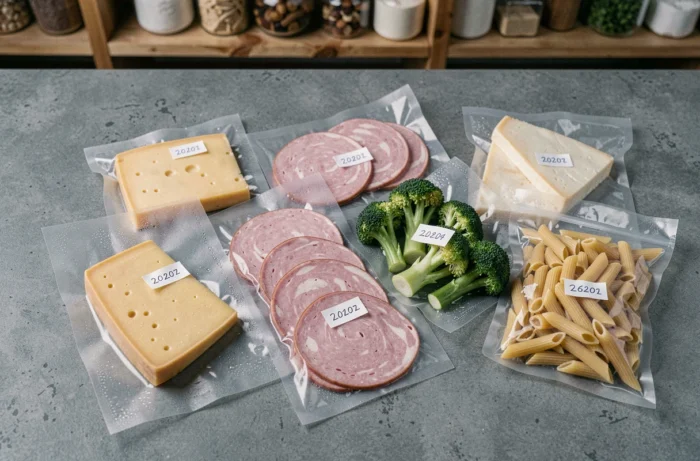
Labeling is the entry point for any reliable organization. We note on each pouch the contents, the vacuum sealing date, and the intended storage method (refrigerator or freezer). Without this discipline, we end up with identical pouches whose age we no longer know.
- Raw portioned meat: we separate the pieces before vacuum sealing to avoid defrosting an entire batch when we need just one portion.
- Blanched vegetables: a quick dip in boiling water before packaging stops enzymatic activity and preserves color and texture.
- Prepared dishes: we wait for complete cooling in an ice bath before sealing to avoid condensation inside the bag.
- Delicate fruits: berries and soft fruits do not handle strong suction well, so we reduce the power or use a rigid vacuum box.
The shelf life of vacuum-sealed food in the refrigerator far exceeds that of a simple airtight container. Fresh meat, for example, goes from a few days to a significantly longer duration once properly packaged. In the freezer, protection against freezer burn further extends the quality of the product.
A often overlooked point: a defrosted vacuum-sealed food is treated like an opened fresh product. It should be consumed within 24 to 48 hours and should not be refrozen. This rule applies to meat, fish, and prepared dishes, without exception.
The preservation gain is realized when three conditions are met: the cold chain is maintained without interruption, the seal is checked for each pouch, and the product is consumed or frozen within the timeframes appropriate to its category.