A parent moving to Rennes or a rural municipality in Ille-et-Vilaine faces a confusing network of actors: the Department, CAF, associations, and home services. Each structure covers a specific area, but overlaps and gaps in coverage are not uncommon. Understanding who does what, and especially how to coordinate these aids, helps avoid losing several weeks on a misdirected application.
Departmental Social Action Centers: the first reflex in case of family difficulties
In Ille-et-Vilaine, 22 departmental social action centers (CDAS) cover the territory. Each center brings together social workers, educators, nurses, psychologists, midwives, and childcare workers under one roof. There are also social and family economy advisors available.
Specifically, when a family goes through a tough time (job loss, separation, housing issues), the CDAS is the entry point. A social worker assesses the situation and directs them to the appropriate resources: housing solidarity fund, emergency food aid, or educational support. For families who are not yet familiar with these resources, they can access family services on CM 35 to identify available services by municipality.
Maternal and child protection consultations (PMI) are hosted in these same structures. They offer free pregnancy follow-up and health assessments for children under six years old. Doctors and childcare workers also provide mandatory vaccinations there.
Solidarity pricing in school catering: 12 rates based on income
Since the start of the 2026 school year, the Ille-et-Vilaine Department has implemented a grid of 12 rates for public college canteens. The price of a meal ranges from €0.80 to €5.90 depending on the household’s resources. Registration is done online, on the departmental platform Illisa.
This system replaces the previous flat rate that did not take into account income disparities between families. For the most modest households, the savings are significant over a full school year.
Back-to-school allowance in Ille-et-Vilaine
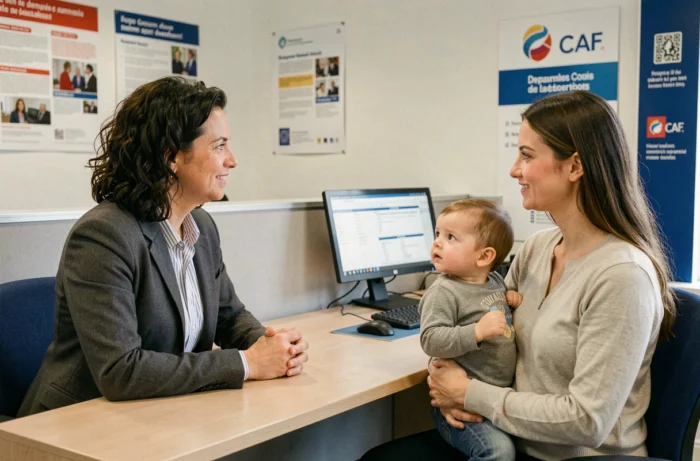
The other major financial lever at the start of the school year remains the back-to-school allowance (ARS). The CAF of Ille-et-Vilaine paid this aid on August 18, 2026, to 37,000 families in the department. The payment is automatic for up-to-date files, with no additional steps required for children aged 6 to 15.
For high school students aged 16 to 18, families simply need to confirm enrollment on their CAF space. Feedback varies on processing times for incomplete files, but most families receive the aid before the first week of classes.
Home help and childcare: a dense but uneven network
The public directory of autonomy services lists 168 home help services in Ille-et-Vilaine. This figure reflects a significant territorial network, but it masks disparities between the well-equipped Rennes agglomeration and certain rural cantons where workers juggle long distances.
These services are not only for the elderly. Families also find:
- Childcare at home, especially for atypical hours (night work, weekends) that traditional nurseries do not cover
- Housekeeping and cleaning assistance, often partially funded by CAF through the free choice of childcare supplement
- Occasional support after hospitalization or childbirth, provided by organizations like ADMR of Ille-et-Vilaine
The associative network Familles Rurales complements this offer with leisure centers, extracurricular activities, and parenting support in municipalities where public facilities are lacking.
Family mediation and budget support in Ille-et-Vilaine
Beyond financial aid, two services remain underutilized even though they address frequent needs.
Family mediation, offered by UDAF 35, intervenes during a separation or family conflict. A neutral mediator helps the parties reach an agreement on child custody, sharing expenses, or maintaining grandparent/grandchild relationships. This service sometimes avoids lengthy and costly legal proceedings.
Budget support, on the other hand, targets families in situations of over-indebtedness or financial fragility. It is not just simple advice: a professional analyzes spending items, negotiates with creditors if necessary, and builds a repayment plan tailored to actual income.
- The Family House of UDAF 35 offers collective workshops on budget management, open without income conditions
- Partner offices also welcome lawyers for family law questions (child support, parental authority)
- Solidarity shared housing is an emerging solution for single-parent families struggling to find housing on their own
Child protection and PMI follow-up: specialized professionals in each CDAS
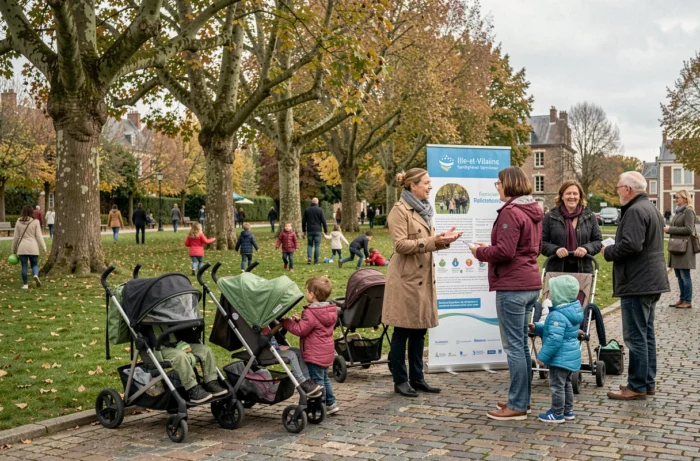
Each departmental social action center includes a team dedicated to children. Specialized educators and social workers ensure follow-up for families reported or voluntarily assisted. PMI consultations remain free and without appointment in most centers.
For families facing a child’s disability, the process remains complex. A recent case of a family from Bréal-sous-Montfort, reported by local press, illustrates the difficulties in accessing suitable schools due to a lack of available places. The Department funds part of the support, but coordination with the Departmental House for Disabled Persons (MDPH) often prolongs delays.
The Ille-et-Vilaine department regularly recruits childhood-family managers and family assistants to strengthen these teams. Job offers are published on the Department’s website and on public employment platforms.
Whether seeking one-time financial assistance, suitable childcare, or sustainable social support, the most reliable entry point remains the CDAS of their municipality. This is where the most personalized guidance is provided, and it is often the only place where all departmental, CAF, and associative resources are known and coordinated with each other.