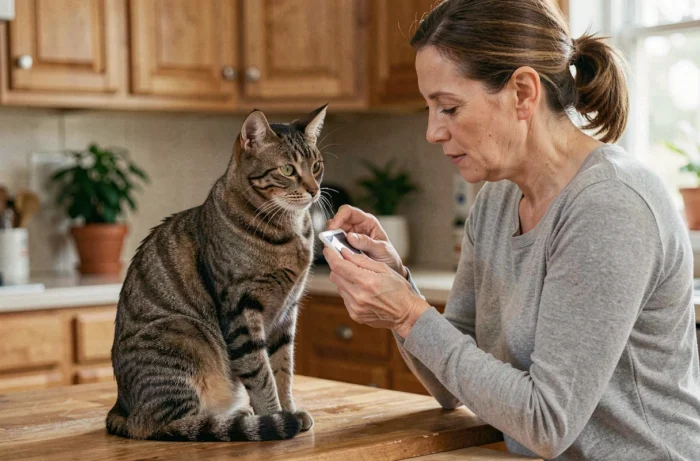
Clavaseptin combines amoxicillin and clavulanic acid in a 4:1 ratio. For cats, the 50 mg tablet (40 mg of amoxicillin, 10 mg of clavulanic acid) remains the reference dosage. Its score line allows for splitting into two equal halves, which simplifies dosage adjustment for smaller sizes.
Pharmacokinetics in cats: what the leaflet does not detail
Amoxicillin is a broad-spectrum semi-synthetic bactericidal amino-penicillin. Clavulanic acid, on the other hand, progressively and irreversibly inhibits a large number of beta-lactamases produced by both Gram-positive and Gram-negative bacteria. This complementarity protects the anti-infective activity of amoxicillin against resistant strains.
Cats metabolize the combination differently than dogs. In practice, we observe a more pronounced hepatic sensitivity in felines, with documented cases of elevated liver enzymes and bilirubin, even jaundice. Animals already compromised in liver function require close monitoring from the start of treatment.
The pork liver flavor integrated into the tablets facilitates spontaneous acceptance in some cats, but does not replace a controlled administration technique when the animal refuses oral intake.
Before administering clavaseptin to your cat, we recommend checking with the veterinarian for any history of hypersensitivity to penicillins or cephalosporins, as cross-allergy remains possible.
Clavaseptin dosage for cats and adjustment by weight
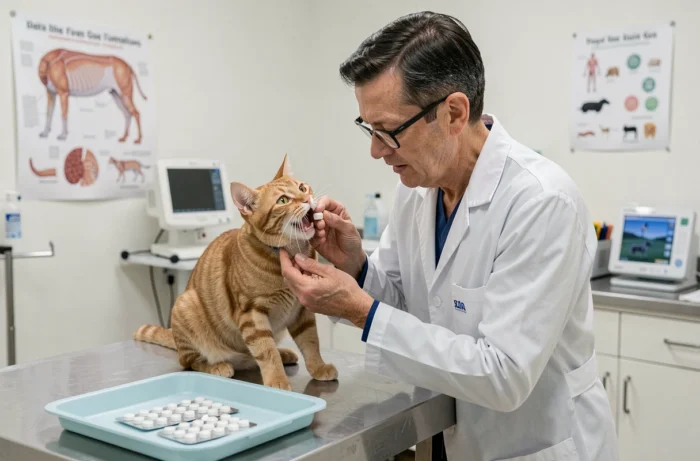
The recommended dosage is 12.5 mg per kg of body weight, twice daily. For an average-sized cat, this corresponds to half a 50 mg Clavaseptin tablet morning and evening. The splitting of the score line should be clean: a veterinary pill cutter ensures an even distribution of active ingredients.
Duration of treatment according to indication
Skin infections (wounds, abscesses) generally require a course of at least five days. Urinary infections demand a longer duration, often exceeding a week. The current trend in veterinary medicine encourages limiting the duration of amoxicillin-clavulanic acid courses to the strict minimum necessary to contain antibiotic resistance.
Interrupting treatment before the prescribed end promotes the selection of resistant strains. Conversely, prolonging without clinical reevaluation exposes the animal to cumulative adverse effects, particularly hepatic.
Real adverse effects of Clavaseptin in felines
The leaflets mention vomiting and diarrhea. Reports from pharmacovigilance and clinical practice go further. In cats treated with amoxicillin-clavulanic acid, we regularly observe:
- A marked anorexia that can set in from the first doses and persist for several days after stopping treatment.
- Unusual lethargy, often confused with the progression of the infection itself, but which disappears upon stopping the antibiotic.
- A measurable weight loss over long courses, related to decreased appetite and digestive disturbances.
- Cases of elevated liver enzymes and bilirubin, with a risk of jaundice in predisposed individuals.
In the event of a cat not eating for more than 48 hours while on Clavaseptin, the veterinarian should be contacted without delay. Feline hepatic lipidosis can develop rapidly in cases of prolonged fasting.
Techniques for administering the tablet to cats
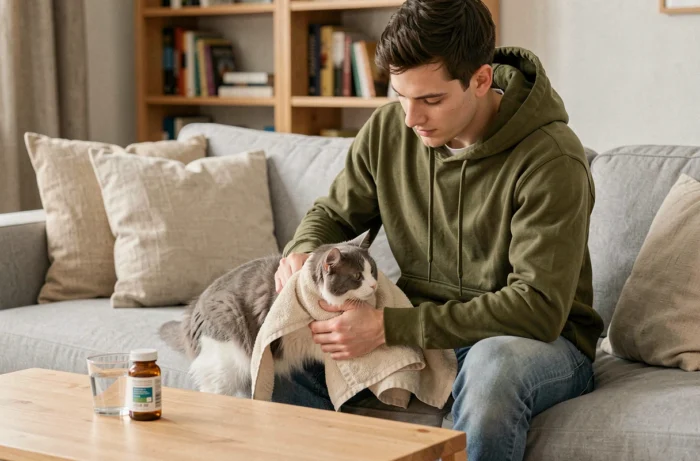
Direct administration remains the most reliable method. Place the cat on a stable surface, slightly tilt its head back, open the mouth by gently pressing on the corners, and place the tablet as far back on the tongue as possible. Close the mouth and keep it closed by briefly blowing on the nose to trigger the swallowing reflex.
Alternatives when the cat categorically refuses
Crushing the tablet and mixing it with a small amount of palatable food (wet food, treats) works if the cat consumes the entire portion. Caution: if the animal leaves leftovers, the actual absorbed dose becomes uncertain.
Using a pill popper reduces the risk of biting and improves the accuracy of placement. For cats that salivate excessively and spit out, coating the tablet in a ball of melted cheese or specific palatable paste limits contact with taste buds.
Contraindications and drug interactions of Clavaseptin
Clavaseptin is contraindicated in animals with hypersensitivity to penicillins, cephalosporins, or any of the excipients. It should not be administered to rabbits, guinea pigs, hamsters, or gerbils, as penicillins cause fatal imbalances in their digestive flora.
- Do not combine Clavaseptin with bacteriostatic antibiotics (tetracyclines, macrolides, chloramphenicol), which antagonize the bactericidal effect of penicillins.
- The use in pregnant or nursing females should be evaluated on a case-by-case basis by the prescribing veterinarian.
In case of overdose, expected signs are gastrointestinal disturbances (severe vomiting, profuse diarrhea). There is no specific antidote: treatment is symptomatic, with supportive hydration if necessary.
The opened tablet cannot be stored. Each unused half tablet must be administered within 16 hours or discarded. Whole tablets should be kept in their original blister pack, away from moisture. Any unused veterinary medicine must be returned to the pharmacy for proper disposal.